Network Technology
WireGuard vs. Traditional VPNs: Why Modern Network OSes Are Switching
Published September 9, 2026 • 6 min read
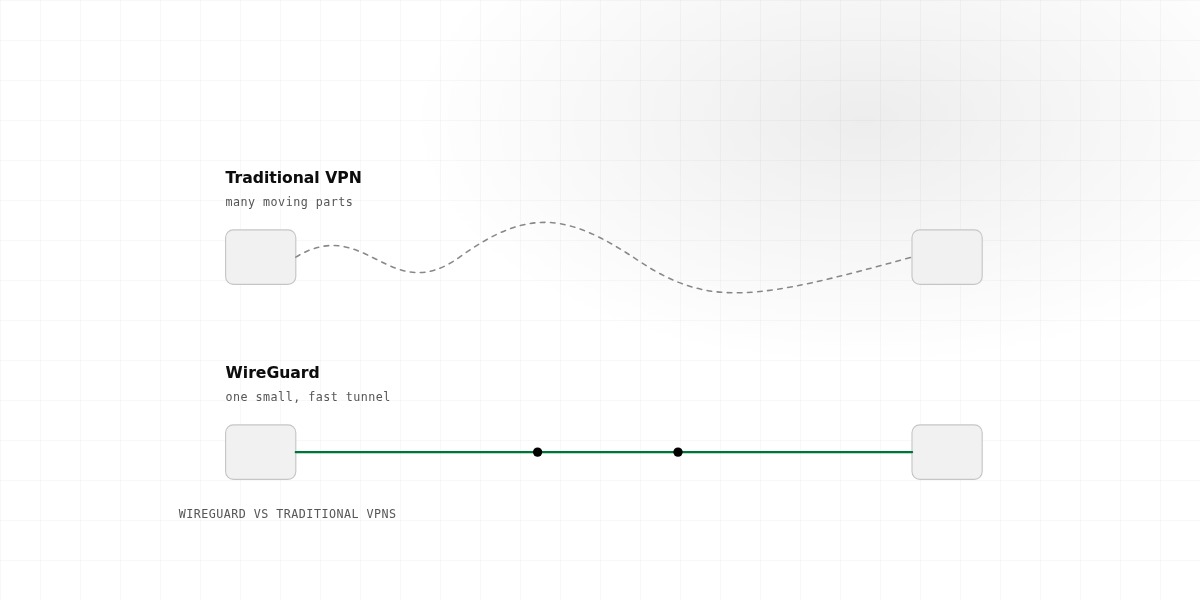
If you've set up a VPN, you've probably heard of OpenVPN or IPSec. They've been around forever. They work. But they're also complex, slow, and designed for problems that don't exist anymore.
WireGuard is what happens when you ask: "What would a VPN protocol look like if we designed it from scratch today?" The answer is elegantly simpler and measurably faster.
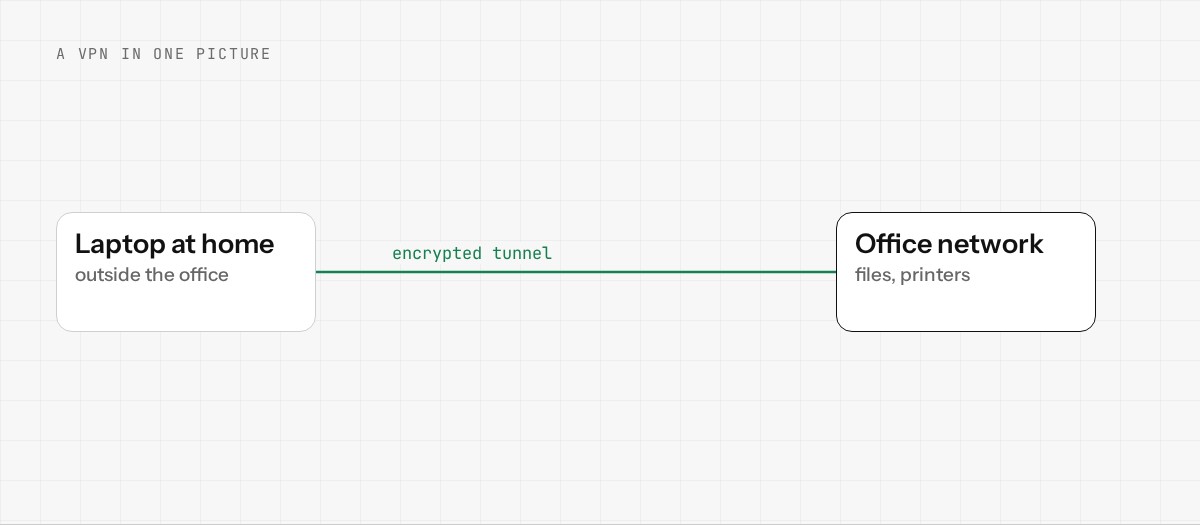
What's a VPN, Briefly
A VPN encrypts your internet traffic and routes it through a remote server, making it appear as if you're in a different location. It's used for:
- •Remote employees connecting securely to an office network
- •Connecting multiple office locations securely over the internet
- •Privacy: hiding your real IP address and ISP traffic from eavesdropping
Traditional VPNs: OpenVPN and IPSec
OpenVPN and IPSec are proven technologies, but they were designed decades ago when internet conditions were different. They're built to handle:
- •Unreliable connections: Mobile networks dropping constantly
- •Weak encryption standards: (because hardware was slow back then)
- •Complex negotiation: Lots of handshaking to agree on encryption methods
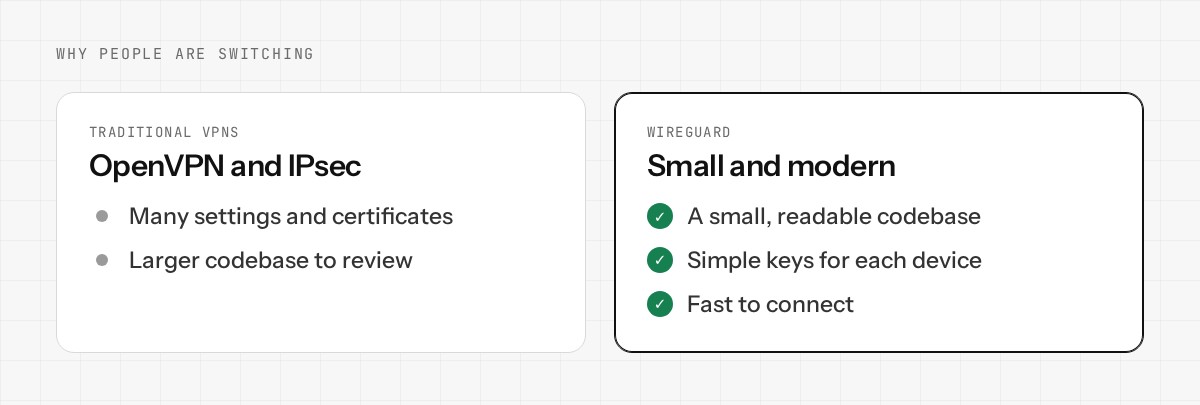
- •Configuration complexity: Certificates, key exchange methods, cipher suites
The result: OpenVPN and IPSec are complex, slow, and generate a lot of CPU overhead.
WireGuard: Modern VPN Design
WireGuard (released 2015, but based on modern cryptography research) throws out the complexity and starts with two principles:
- •Assume good encryption: Use only modern, proven crypto (ChaCha20, Poly1305, Curve25519). No weak ciphers, no negotiation.
- •Minimize code: The entire WireGuard codebase is ~4,000 lines. OpenVPN is ~400,000 lines. Less code = fewer bugs = faster auditing.
The result: WireGuard is simple to configure, fast, and modern.
Performance: The Real Difference
On identical hardware, here's what you typically see:
WireGuard throughput
~1.6 Gbps (modern laptop's full bandwidth)
OpenVPN throughput
~200-400 Mbps (significantly slower)
Latency overhead
WireGuard: ~1-2ms. OpenVPN: ~10-20ms.
For a remote worker, that's the difference between a snappy connection (WireGuard) and a sluggish one (OpenVPN).
Security: Is WireGuard Actually Safe?
Yes. The concern isn't the protocol itself — it's that it's newer and has had less real-world review. But:
- •It uses ChaCha20 and Poly1305, the same cryptographic primitives used in TLS 1.3 (the current internet standard)
- •The codebase is small enough that professional security auditors have thoroughly reviewed it
- •It's now used by Apple, Google, and Cloudflare for their own VPN services
- •It's the default VPN protocol in Linux, Android, iOS, and macOS
WireGuard is battle-tested at scale.
Configuration: Simplicity as a Feature
Configuring OpenVPN typically involves:
- •Creating certificates and key files (confusing)
- •Writing configuration files with 50+ options
- •Figuring out which cipher suites to use
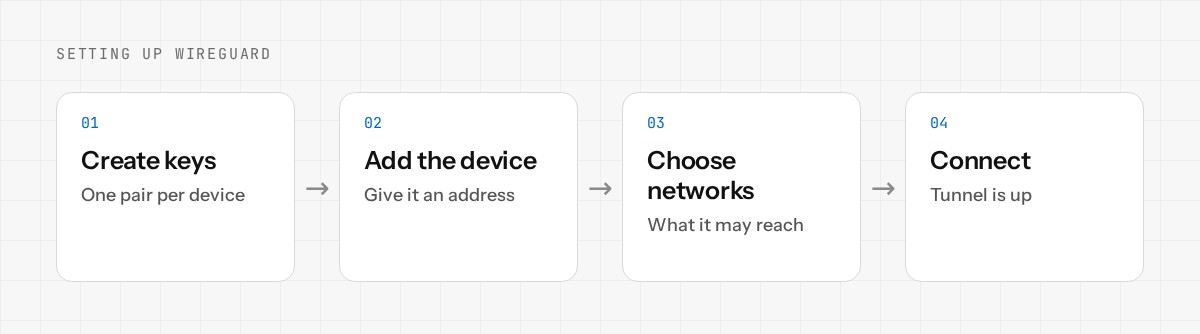
Configuring WireGuard:
- •Generate a keypair (one command)
- •Specify IP addresses and peers
- •Done
Simpler configuration means fewer mistakes and faster setup.
Why The Shift Is Happening
Enterprise and consumer VPN products are switching to WireGuard because:
- •Modern networks are more stable — the assumptions OpenVPN was built on don't apply anymore
- •Mobile is dominant — WireGuard handles connection changes (WiFi → cellular) more elegantly
- •Speed matters — WireGuard's performance is measurably better
- •Simplicity is security — fewer lines of code means fewer bugs
For new deployments, WireGuard is the right choice.
Enwigate OS uses WireGuard natively for all VPN connections — site-to-site, remote access, everything. That's why it feels fast.
Want to experience WireGuard performance firsthand? Join the early access.