Infrastructure
Do You Need Proprietary Hardware to Run a Modern Firewall? No.
Published September 9, 2026 • 5 min read
One of the oldest dynamics in enterprise IT is the firewall trap: buy an expensive, proprietary appliance, and you're locked in. If you want to upgrade, you buy a newer model from the same vendor. If you want to run it on different hardware, you can't. If the vendor goes out of business, your network infrastructure goes with it.
This doesn't have to be your reality. Modern network operating systems are software, not hardware. That changes everything.
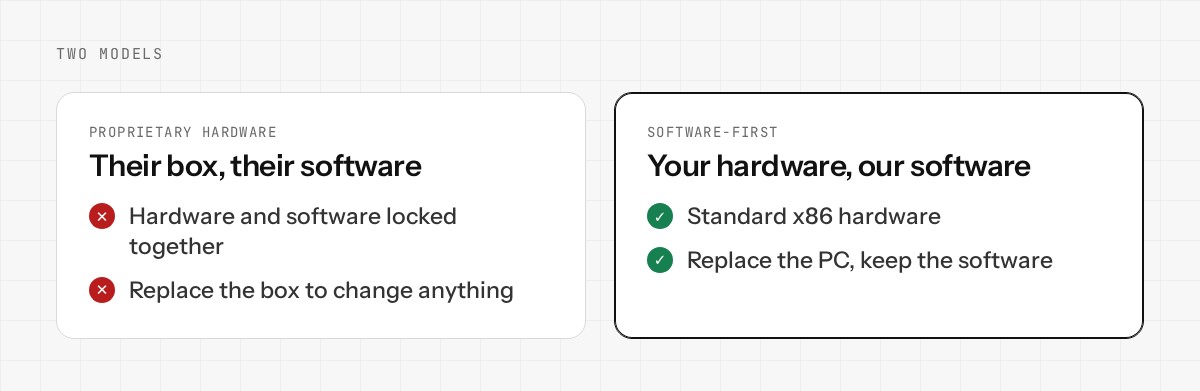
The Proprietary Hardware Model
Proprietary firewall appliances are usually a locked bundle: custom hardware + proprietary OS + software license + support contract. You can't separate them. The hardware is optimized (or locked) to the OS. The software won't run on other hardware.
This model has advantages for the vendor: high margins, vendor lock-in, predictable revenue. It has disadvantages for you:
- •Cost. Proprietary hardware commands premium pricing because you have no alternatives.
- •Waste. When you need to upgrade capacity, you often replace the entire appliance, even if the existing hardware could handle it.
- •Inflexibility. You can't run the firewall on hardware you already own or prefer.
- •Vendor dependence. Your network infrastructure is tied to one company's roadmap and support lifecycle.
- •Resale problems. When you're done with the appliance, good luck selling it — the vendor controls the resale market.
The Software-First Model
A software-first network operating system separates the software from the hardware. You get:
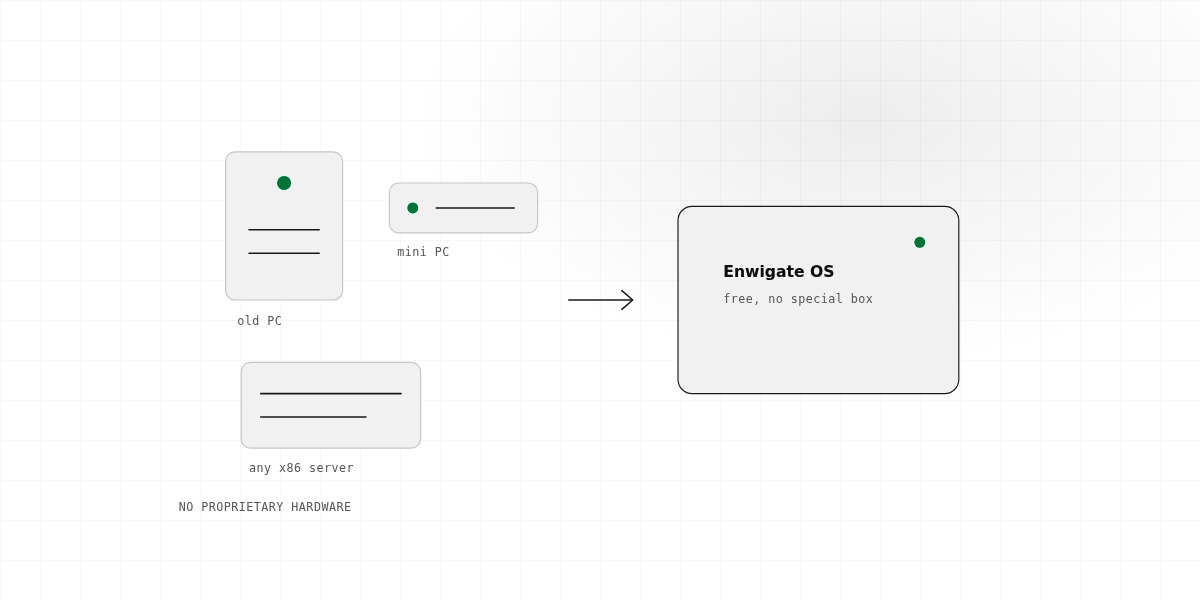
- •Hardware choice. Run it on a mini PC, an old server you have lying around, or a cloud instance.
- •Cost control. Buy the hardware you actually need, not what the vendor decided to bundle.
- •Upgrade flexibility. Need more throughput? Upgrade the CPU, RAM, or storage without replacing everything.
- •Portability. Move the OS to new hardware whenever you want — the software runs anywhere that meets the system requirements.
- •Vendor independence. Your network is yours. If the company stops supporting the OS, you can keep running it, or migrate to something else.
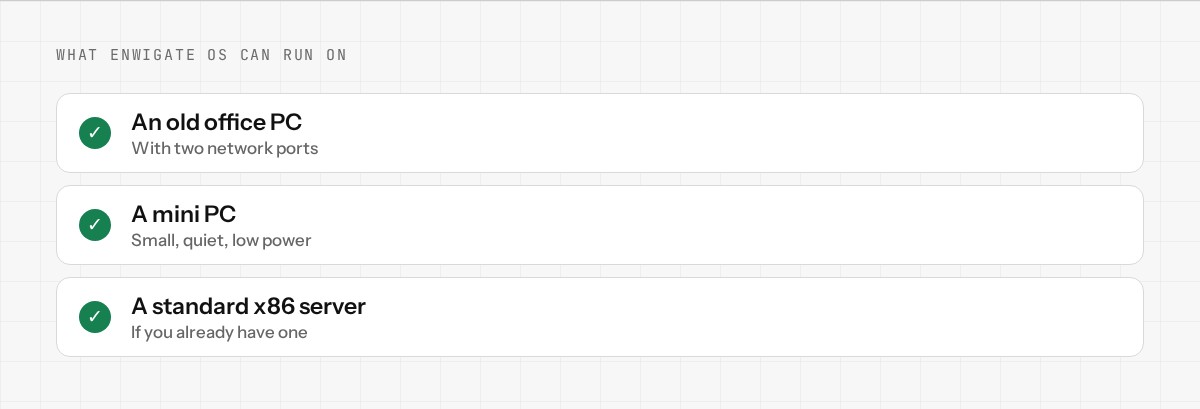
Real Examples: What You Could Run Enwigate OS On
Because Enwigate OS is software, not a locked appliance, you have choices:
A mini PC ($200–500)
Intel NUC, Lenovo ThinkCentre Mini, or similar. x86, 8GB RAM, enough for a medium office with room to grow.
An old server you already own
No need to buy new hardware. If it runs Linux, it can run Enwigate OS.
A cloud instance (AWS, DigitalOcean, etc.)
For remote office routers or VPN concentrators, spin up an instance and run Enwigate OS on it.
The hardware cost is transparent. There's no markup for being "branded" network infrastructure. You pay for the actual hardware, nothing more.
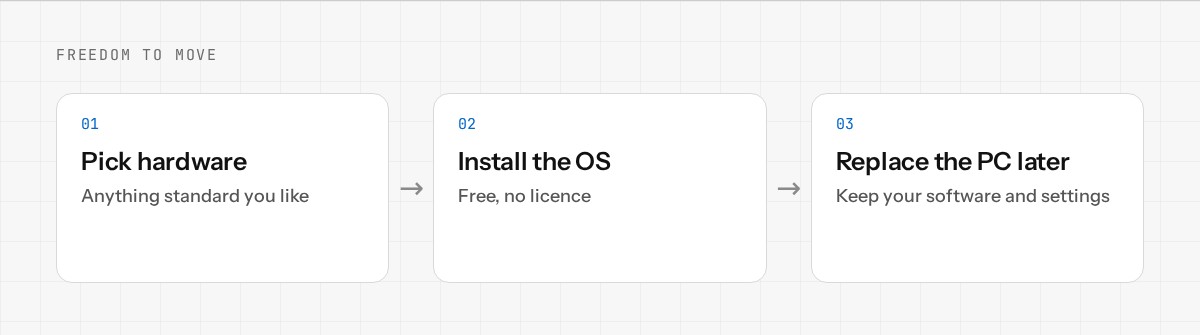
Why Vendors Lock You In (And Why You Don't Have To Accept It)
Proprietary hardware serves the vendor, not you. It's a revenue model disguised as convenience. The reality is that separating software from hardware has been standard practice in almost every other part of IT for decades — databases, web servers, mail systems, everything.
Network operating systems are finally catching up. Software-first means you own your infrastructure. You control the hardware decisions. You control the upgrade path. You control your costs.
That's how it should be.
Want to see what's actually possible? Join the Enwigate OS early access.